Ghee: properties, benefits and uses
· 2 min
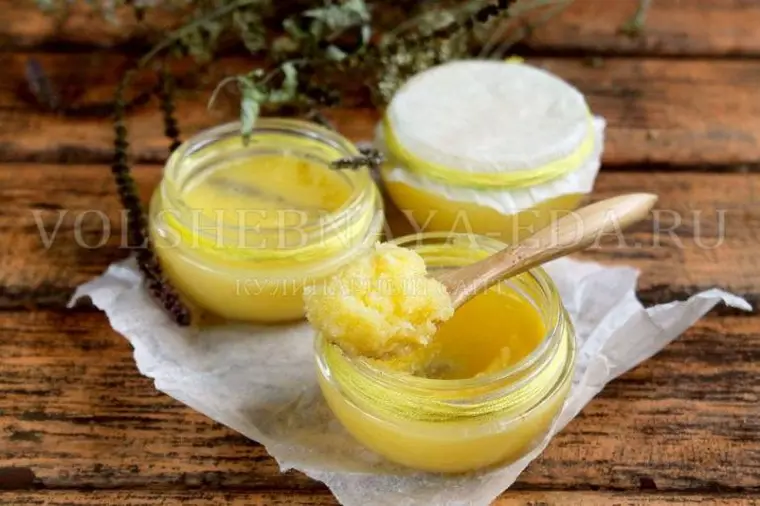
Ghee is an animal fat made by slowly melting butter over a low heat. In the process, the water and milk proteins (lactose and casein) settle out, leaving pure fat on the surface.
Key properties of ghee
- practically free of lactose and casein
- has high heat stability
- does not oxidise easily when baking
- has a pleasant aroma and flavour
Nutritional value
Ghee consists mainly of fatty acids, including:
- saturated fatty acids
- short-chain fatty acids (for example, butyrate)
Butyrate plays an important role
- in nourishing the lining of the gut
- in producing energy
- in supporting the digestive system
Vitamins and bioactive compounds
Ghee contains fat-soluble vitamins:
- Vitamin A: vision and immunity
- Vitamin D: bone health
- Vitamin E: antioxidant protection
- Vitamin K: blood clotting
Ghee and health
Eaten in moderation, it:
- provides energy
- helps you feel full
- can be part of a low-carbohydrate diet
❗ It is important to note that ghee is not a medicine and does not replace medical treatment.
➤ Using ghee in cooking
- ideal for frying and baking
- does not form toxic compounds at high temperatures
- goes well with both animal and plant foods
How to make ghee at home
Making ghee at home is simple, but it needs attention and careful temperature control.
What you need
- natural butter (made from cow's milk) with 82–82.5% fat
Method
- Put the butter in a heavy-bottomed pan over a low heat.
- Stir from time to time as it melts so that it does not stick to the bottom.
- At first a white foam forms on the surface; you can carefully skim it off if needed.
- As it keeps simmering, the butter gradually separates into layers:
- on top: clear, amber-coloured fat
- at the bottom of the pan: a sediment of milk proteins and other residues
- The process takes 60–90 minutes on average, depending on the quality of the butter.
- When the top layer is completely clear and the sediment has fully settled, the ghee is ready.
Straining and storage
- Carefully strain the melted fat through several layers of cheesecloth or a fine sieve.
- Pour the clean ghee into a glass jar.
- Store it in a cool, dry place at room temperature or in the fridge.
Properly made ghee keeps its quality for a long time, does not spoil easily and needs no preservatives. Both fresh and aged ghee can be used in cooking and in skin care.
Cosmetic uses
Ghee is often used
- to moisturise the skin
- to care for dry skin
- in hair care masks
Test for an individual reaction before use.
✅ Conclusion
Ghee is a high-calorie but high-quality fat that, used correctly and in moderation, can be part of a healthy diet. Its advantages are heat stability and biological value, but it is not a cure-all.
Author: Irakli Kenchoshvili / Tidanigym.ge
Copying without permission is prohibited.
✅ Sharing with a link to the source is welcome
Got a question? Message or call us
Tidani + is a gym at 4 Politkovskaya St., 300 m from the metro. Mon–Fri 09–22, Sat–Sun 09–18.