Cortisol: stress hormone or vital regulator?
· 3 min
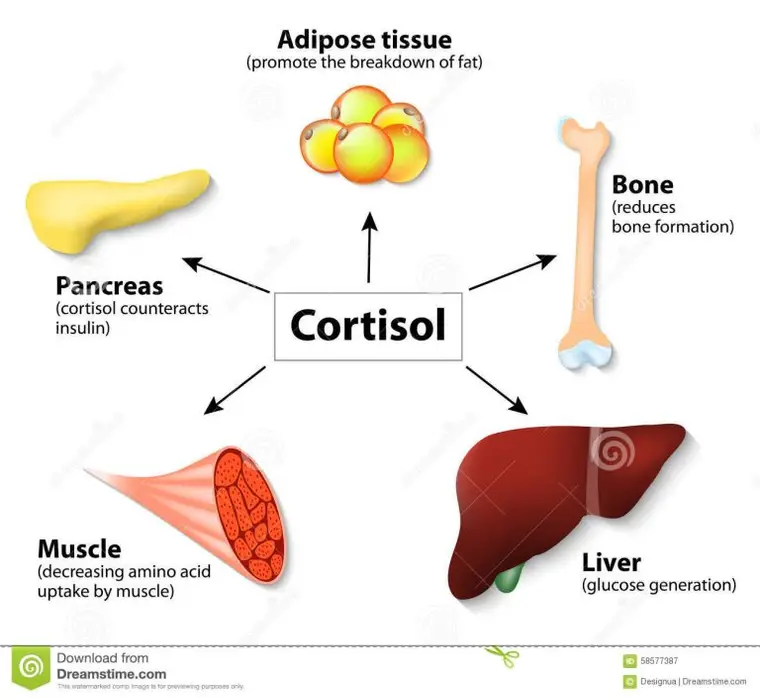
Cortisol is a glucocorticoid hormone produced by the adrenal cortex. It is often called the “stress hormone”, but in fact cortisol is essential for life: it helps regulate energy balance, blood pressure, the immune response and metabolism.
➤ How is cortisol controlled?
Cortisol release is regulated by the hypothalamic–pituitary–adrenal axis (HPA axis):
- the hypothalamus releases CRH
- the pituitary gland releases ACTH
- ACTH stimulates the adrenal glands to release cortisol
Cortisol follows a daily rhythm:
- 🔺 peak: 6–9 a.m.
- 🔻 low point: late at night
This rhythm helps the body wake up and start the day's activity.
➤ The main functions of cortisol
1️⃣ Regulating glucose
Cortisol raises blood glucose
- it boosts gluconeogenesis in the liver
- it reduces glucose uptake by peripheral tissues
- it acts as an insulin antagonist
Its purpose is to give the body energy during stress.
2️⃣ Supporting blood pressure
Cortisol makes blood vessels more sensitive to catecholamines, which helps maintain blood pressure.
3️⃣ Regulating inflammation
In the short term, cortisol suppresses inflammation (which is why corticosteroids are used in medicine).
A long-term high level, however, suppresses immunity.
4️⃣ Protein, fat and muscle metabolism
- increases protein breakdown (a catabolic effect)
- increases lipolysis, but when chronically high it can promote fat storage around the waist
Cortisol and stress
Under stress, two hormones are activated
- adrenaline: a fast, short-term response
- cortisol: longer-lasting metabolic support
Adrenaline acts within minutes. Cortisol acts more slowly, but its effect lasts for hours.
What happens when cortisol is chronically high?
Long-term stress → constantly high cortisol → metabolic and hormonal imbalance.
Possible consequences
- loss of muscle mass
- fat build-up around the belly
- higher risk of insulin resistance
- high blood pressure
- lower bone density
- weaker immunity
- sleep problems
- lower testosterone
“Adrenal fatigue” is not an officially recognised medical diagnosis. Chronic stress does, however, really disrupt the regulation of the HPA axis.
Cortisol and diabetes
Cortisol raises glucose levels.
A chronically high level contributes to
- insulin resistance
- metabolic syndrome
- a higher risk of type 2 diabetes
But cortisol does not “break muscles down directly into glucose”: the process works through amino acids being used in gluconeogenesis.
Cortisol and training
Training is a form of physiological stress.
✔ Cortisol rises temporarily during intense training
✔ This rise helps mobilise energy
✔ Muscle growth depends on the overall balance between anabolic (testosterone, growth hormone) and catabolic processes
❗ Important:
- training that is too long and too hard → chronic stress
- recovery, sleep and nutrition → the foundation of hormonal balance
Cortisol is not the main “signal” for muscle growth, but it does take part in the adaptation process.
What raises cortisol?
- chronic psychological stress
- lack of sleep
- hunger
- heavy, excessive training
- caffeine (especially in people not used to it)
Possible signs of high cortisol
- fat around the middle
- muscle weakness
- rising blood pressure
- sleep problems
- irritability
- getting infections easily
How to keep cortisol in balance
1️⃣ Regular sleep
7–9 hours of good-quality sleep.
2️⃣ Sensible training
- moderate intensity
- recovery days
- avoiding overtraining
3️⃣ Managing stress
- breathing techniques
- meditation
- social support
- time in nature
4️⃣ Balanced nutrition
- enough protein
- complex carbohydrates
- omega-3 fatty acids
- cutting back on excess caffeine
5️⃣ Laughter and a positive emotional state
Positive emotions soften the stress response and improve regulation of the HPA axis.
Conclusion
Cortisol is not a “bad hormone”.
It is a key regulator of survival, energy mobilisation and adaptation.
The problem starts when stress becomes chronic and cortisol stays high all the time.
Balance is what matters most.
Author: Irakli Kenchoshvili / Tidanigym.ge
Copying without permission is prohibited.
✅ Sharing with a link to the source is welcome
Got a question? Message or call us
Tidani + is a gym at 4 Politkovskaya St., 300 m from the metro. Mon–Fri 09–22, Sat–Sun 09–18.