Happiness hormones: how brain chemistry works
· 2 min
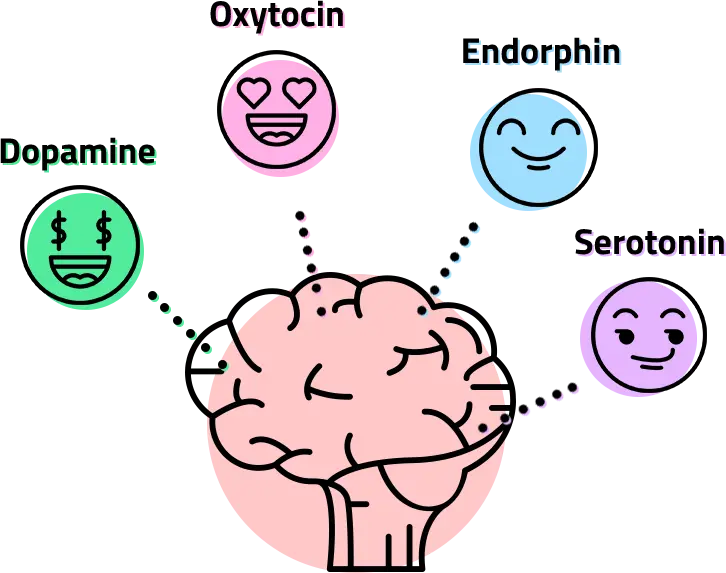
A person's emotional state does not depend only on character or circumstances. Brain chemistry plays an important role: the neurotransmitters and hormones that affect our mood, motivation, stress and sense of pleasure.
The “happiness hormones” are in fact several different biochemical substances, each with its own function.
1. Endorphins: natural painkillers
Endorphins are peptides produced in the brain and nervous system.
Their functions
- reduce the perception of pain
- cause mild euphoria
- lessen the feeling of stress
Physical exercise, laughter, social contact and music all help release endorphins.
2. Dopamine: the core of the motivation and reward system
Dopamine is a neurotransmitter that takes part in the brain's reward system.
Its main functions
- motivation and drive towards a goal
- the feeling of pleasure from achievement
- learning and habit formation
- motor control
Dopamine deficiency is associated with Parkinson's disease.
Dopamine imbalance is linked to psychotic symptoms and schizophrenia.
With addictions (alcohol, drugs, gambling), dopamine is artificially and strongly stimulated, which over time disrupts its natural regulation.
3. Serotonin: the mood stabiliser
Serotonin is a neurotransmitter that plays an important role in:
Functions
- stabilising mood
- regulating sleep
- controlling appetite
- reducing anxiety
Low serotonin levels are associated with depressive symptoms. That is why many antidepressants act on the serotonin system.
Sunlight and foods rich in tryptophan (eggs, fish, nuts) support its natural synthesis.
4. Oxytocin: the social bonding hormone
Oxytocin is produced in the hypothalamus and takes part in:
- building trust
- emotional attachment
- the bond between parent and child
- relationships between partners
Social support and physical contact raise oxytocin levels.
5. Melatonin: the regulator of sleep and circadian rhythm
Melatonin is produced in the dark and is not an “anti-happiness” hormone.
Its functions
- starting sleep
- regulating the biological clock
- antioxidant action
A lack of sunlight can disrupt the circadian rhythm, which affects mood.
Addiction and brain chemistry
Addiction is not simply a problem of “too few happiness hormones”. It is a complex neurobiological and psychological process involving:
- the dopamine reward system
- stress hormones
- genetic factors
- environment and behavioural habits
Genetics plays a part (roughly 30–50%), but lifestyle, environment and psychological factors are just as important.
How to support your natural neurochemical balance
Scientifically proven ways
✔ Regular physical activity
✔ Good-quality sleep
✔ Sunlight
✔ Social connections
✔ Purposeful activity
✔ Music
✔ Practising gratitude
Conclusion
The “happiness hormones” are not a single substance. They are a complex neurochemical system in the brain that regulates our mood, motivation, energy and social behaviour.
Happiness is not only chemistry, but chemistry plays an important role in how we perceive the world.
Author: Irakli Kenchoshvili / Tidanigym.ge
Copying without permission is prohibited.
✅ Sharing with a link to the source is welcome
Got a question? Message or call us
Tidani + is a gym at 4 Politkovskaya St., 300 m from the metro. Mon–Fri 09–22, Sat–Sun 09–18.