The glycemic index (GI) of foods
· 2 min
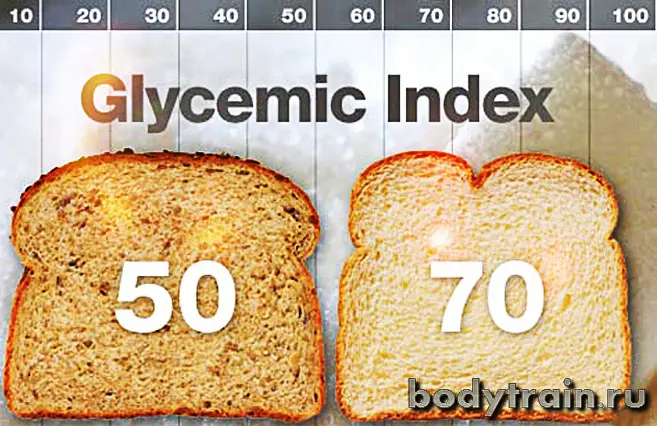
The glycemic index (GI) shows how much and how quickly a particular food raises blood glucose levels because of the carbohydrates it contains.
GI does not reflect calories; it reflects the effect of carbohydrates on blood sugar.
➤ How does the body absorb carbohydrates?
During digestion, carbohydrates are broken down into glucose, which is absorbed into the bloodstream.
This process involves:
- salivary enzymes
- gastrointestinal enzymes
- the intestinal wall
For glucose to enter cells, the body needs insulin — a hormone that moves glucose into the muscles, liver and other tissues.
Types of carbohydrates
Simple carbohydrates
- Monosaccharides: glucose, fructose, galactose
- Disaccharides: sucrose, maltose, lactose
Complex carbohydrates
- Polysaccharides: starch, fiber
Fiber (dietary fiber)
- is not broken down into glucose
- slows digestion and lowers GI
⚠️ A “complex” carbohydrate does not always mean a low GI.
➤ What is the role of insulin?
Insulin
- lowers blood glucose
- helps the body use energy
- when there is excess energy, helps store it
👉 Fat is stored not because of insulin, but because of a calorie surplus.
Insulin takes part in the process; it is not the culprit.
➤ How is the glycemic index measured?
GI is measured like this
- a person is given 50 g of carbohydrate in the form of pure glucose
- the change in blood sugar is measured over 2 hours
- this curve is taken as 100%
- other foods are rated against this standard
GI reflects
- how quickly
- and how high
blood sugar rises
High vs low GI – what is the difference?
High GI
- blood sugar rises quickly and sharply
- large amounts of insulin are released
- hunger returns soon
Low GI
- blood sugar rises slowly and moderately
- energy stays stable
- you stay full for longer
What does GI depend on?
- The amount of fiber
the more fiber, the lower the GI - Heat and mechanical processing
- whole apple ≈ 25
- apple juice ≈ 45–50
- apple compote ≈ 70+
- Adding protein and fat
they slow digestion and lower the overall GI - The structure of the food
the easier it is to chew and digest, the higher the GI
Example
100 g white bread (GI ≈ 95)
100 g rye bread (GI ≈ 50)
The calories and carbohydrates may be similar, but:
- white bread raises blood sugar more sharply
- triggers a larger insulin release
- does less to control appetite
GI, bulking and cutting
- When bulking
simple carbohydrates are fine after training - When burning fat
low- and medium-GI foods are preferred
❗ Nothing is forbidden — what matters is quantity, timing and context
Insulin index (II)
Some foods
- do not raise blood sugar much
- but do raise insulin (e.g. some dairy products)
The insulin index shows exactly this and complements GI data.
✅ Conclusion
✔️ GI is an important indicator, but not the only one
✔️ The form of the food, combinations and quantity all matter
✔️ Low GI helps with appetite control
✔️ Fat gain depends on your overall energy balance
Author: Irakli Kenchoshvili / Tidanigym.ge
Copying without permission is prohibited.
✅ Sharing with a link to the source is welcome
Got a question? Message or call us
Tidani + is a gym at 4 Politkovskaya St., 300 m from the metro. Mon–Fri 09–22, Sat–Sun 09–18.