Lipids
· 2 min
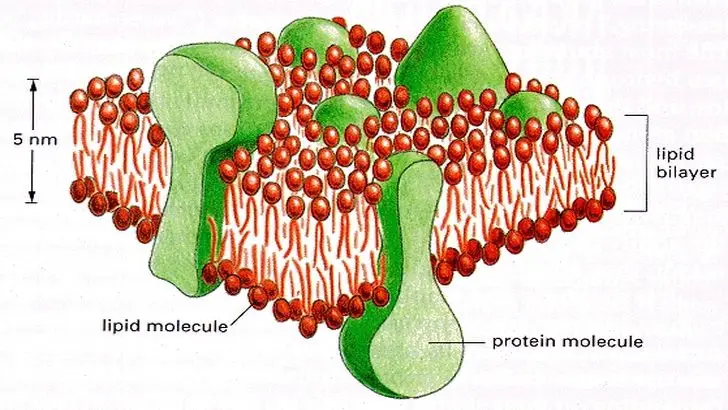
Lipids are a broad group of biologically important organic compounds found in the cells of all living organisms. They perform energy, structural, protective and regulatory functions. Lipids form a major energy reserve, take part in building cell membranes, provide thermal insulation and protect the body from mechanical injury.
Lipids do not dissolve in water, but dissolve readily in organic solvents (ether, chloroform, benzine and others). In some cells they make up only 5–10% of the content, while in others they reach as much as 90% (for example, in oil-bearing plants or in subcutaneous fat cells).
Structure of fats
Fats (triglycerides) consist of glycerol (a trihydric alcohol) and three fatty acids.
Classification of lipids
Simple lipids
- Triglycerides (neutral fats)
- Waxes
Complex lipids
- Phospholipids
- Glycolipids
- Lipoproteins
- Steroids
Simple lipids
Neutral fats (triglycerides)
Neutral fats are the most widespread lipids in nature. Their molecule consists of one glycerol and three fatty acids.
Triglycerides that are solid at 20 °C are called fats, and those that are liquid are called oils. Subcutaneous adipose tissue belongs to this group.
Waxes
Waxes are fat-like substances of plant or animal origin. They consist of esters of higher fatty acids and higher monohydric alcohols.
Waxes form a waterproof coating on plants and animals and protect them from water loss. Bees use wax to build honeycomb.
Complex lipids
Phospholipids
Phospholipids are complex lipids whose molecule contains a phosphoric acid residue, glycerol and fatty acids.
They are widespread in all living organisms and are the main structural component of cell membranes. Phospholipids determine membrane structure, permeability and the activity of membrane enzymes.
Lipoproteins
Lipoproteins are complexes of lipids and proteins that take part in lipid transport. They are found in cell membranes and in blood plasma.
The main classes of lipoproteins
- High-density lipoproteins (HDL) – rich in phospholipids
- Low-density lipoproteins (LDL) – contain cholesterol
- Very-low-density lipoproteins (VLDL) – contain triglycerides
- Chylomicrons – transport dietary fats
Functions of lipids in the cell
Energy function
Lipids are a concentrated source of energy. Oxidising 1 gram of lipid releases about 9 kcal of energy.
Structural function
Lipids are an essential component of the membranes of every cell.
Storage function
Fats are a reserve energy source for both animals and plants.
Water reserve function
Oxidation of fatty acids produces a large amount of metabolic water — oxidising 1 gram of fat yields more than 1 gram of water.
Protective function
Lipids protect the body from mechanical injury. The fat layer cushions the internal organs, while waxes form a waterproof coating and protect the organism from drying out.
Thermal insulation function
The subcutaneous fat layer reduces heat loss and protects the body from temperature changes.
Regulatory function
Lipids are precursors of fat-soluble vitamins (A, D, E, K) and steroid hormones (testosterone, oestrogen). They are also involved in regulating plant growth and development.
Author: Irakli Kenchoshvili / Tidanigym.ge
Copying without permission is prohibited.
✅ Sharing with a link to the source is welcome
Got a question? Message or call us
Tidani + is a gym at 4 Politkovskaya St., 300 m from the metro. Mon–Fri 09–22, Sat–Sun 09–18.