Organic and inorganic substances in living organisms: macro- and micronutrients
· 2 min
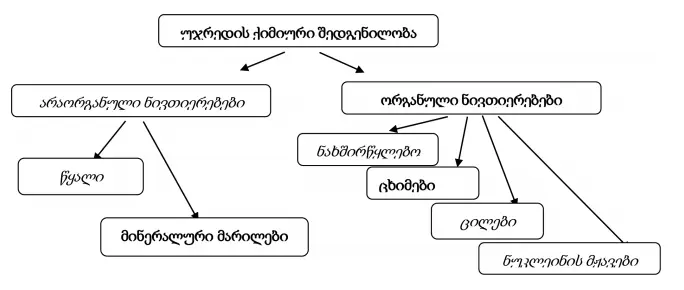
The chemical composition of living organisms is made up of both organic and inorganic substances. Both groups are essential for maintaining the body's structure, its energy supply and every physiological process.
Organic and inorganic substances
All chemical substances fall into two main groups:
organic and inorganic substances.
Organic substances contain carbon and are built mainly from carbon and hydrogen atoms. This group includes:
- proteins
- fats (lipids)
- carbohydrates
- nucleic acids (DNA and RNA)
Some carbon-containing substances are not classed as organic, for example:
- carbon dioxide (CO₂)
- carbon monoxide (CO)
These substances are classified as inorganic.
➤ The role of organic substances in life
Living organisms contain the same chemical elements as non-living nature, but what makes them unique is the presence of organic compounds.
- Proteins — enzymes, structural and regulatory molecules
- Nucleic acids (DNA, RNA) — storing and passing on genetic information
- Carbohydrates — the main source of energy
- Fats — an energy reserve and the basis of cell membranes
It is proteins and nucleic acids that enable the body's self-regulation, reproduction and adaptation — the defining features of life.
Inorganic substances in the body
A large share of a living organism's mass consists of inorganic substances:
- water — about 70–80%
- minerals — about 1–1.5%
Water is essential for every biochemical reaction, for thermoregulation and for transporting substances, while minerals take part in bone structure, nerve impulse transmission and enzyme activity.
Metabolism
One of the key properties of a living organism is the exchange of matter and energy — the sum of all chemical reactions taking place in the body.
Metabolism provides:
- energy production
- tissue renewal
- the body's constant interaction with its environment
Nutrients — macro and micro
The food substances the body needs to stay alive are called nutrients. They are divided into six main groups:
- Carbohydrates
- Fats
- Proteins
- Water
- Vitamins
- Minerals
Macronutrients
Macronutrients are substances the body needs in large amounts:
- carbohydrates
- fats
- proteins
- water
Micronutrients
Micronutrients are substances needed in small amounts, yet they are extremely important:
- vitamins
- minerals
Author: Irakli Kenchoshvili / Tidanigym.ge
Copying without permission is prohibited.
✅ Sharing is welcome with a link to the source
Got a question? Message or call us
Tidani + is a gym at 4 Politkovskaya St., 300 m from the metro. Mon–Fri 09–22, Sat–Sun 09–18.